

.webp)








A leaky roof can be frustrating at any time, but it becomes a serious concern when leaks only appear during storms. Many homeowners notice roof leaks during heavy rain and wonder why the problem does not show up in lighter weather. In most cases, heavy rain exposes weaknesses that already exist in the roofing system.
Understanding why leaks in heavy rain happen helps homeowners act early, reduce damage, and protect their homes for the long term.
Why Roof Leaks Appear in Heavy Rain
Roof leaks in heavy rain usually occur because water is entering the roof faster than it can drain away. Small gaps or weaknesses may cope during light showers, but heavy rainfall puts extra pressure on the entire roof system.
When rain is heavy or prolonged, water can:
- Push under the roofing materials
- Collect around fasteners and seams
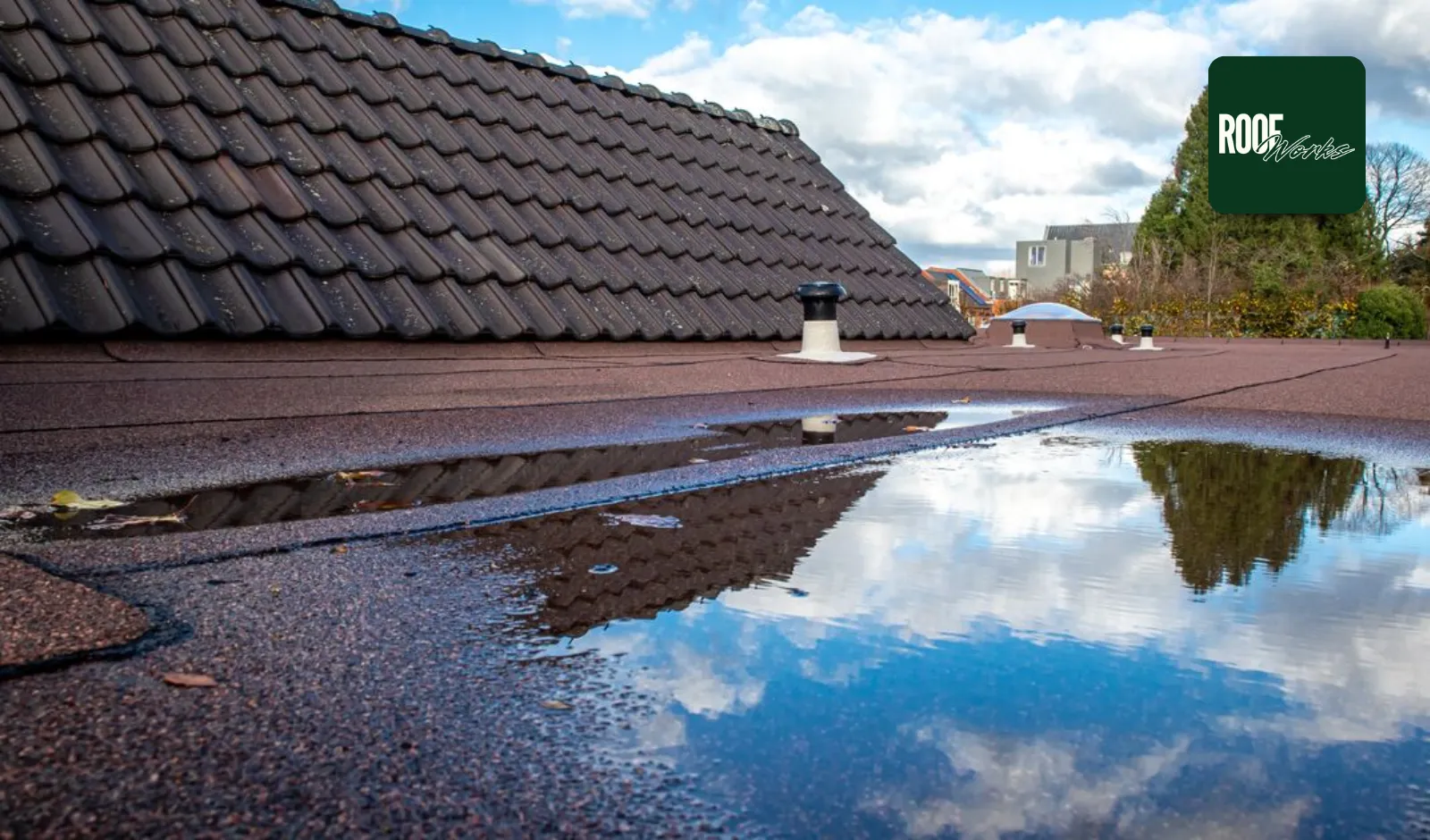
- Pool on flat surfaces
- Expose poorly sealed joints
This is why many homeowners experience roof leaks in heavy conditions, even when the roof appears fine most of the year.
Why Roof Leaks Appear in Heavy Rain
- Poor Installation: One of the most common reasons for leaking roofing issues is poor installation. An improperly installed roof may have loose seams, incorrectly placed flashing, or poorly sealed edges. These issues often stay hidden until heavy rain tests the roof’s limits.
- Roofing Materials Wearing Down: All roofing materials age over time. Cracks, corrosion, and general wear reduce the roof’s ability to repel water. When heavy rain hits, these weakened areas allow moisture to pass through.
- Roofing Nails and Fasteners: Exposed or loose roofing nails can create direct entry points for water. Over time, nails may lift or corrode, allowing water to seep into the roof decking below.
- Pooled Water on Flat Roofs: Flat roof leaks are especially common during storms. Because flat roofs drain more slowly, pooled water can sit for extended periods. This increases pressure on seals and joints, making flat roof leaks in heavy rain more likely.
- Roof Decking Issues: Once water reaches the roof decking, damage can spread quickly. Wet decking weakens the roof structure and increases the risk of long-term water damage.
Why Flat Roof Leaks in Heavy Rain Are More Common
Flat roofs are designed with slight slopes, but they still struggle during intense rainfall. Flat roof leaks often develop when drainage systems are blocked or the surface has uneven areas that trap water.
Leaks during heavy rain on flat roofs usually point to:
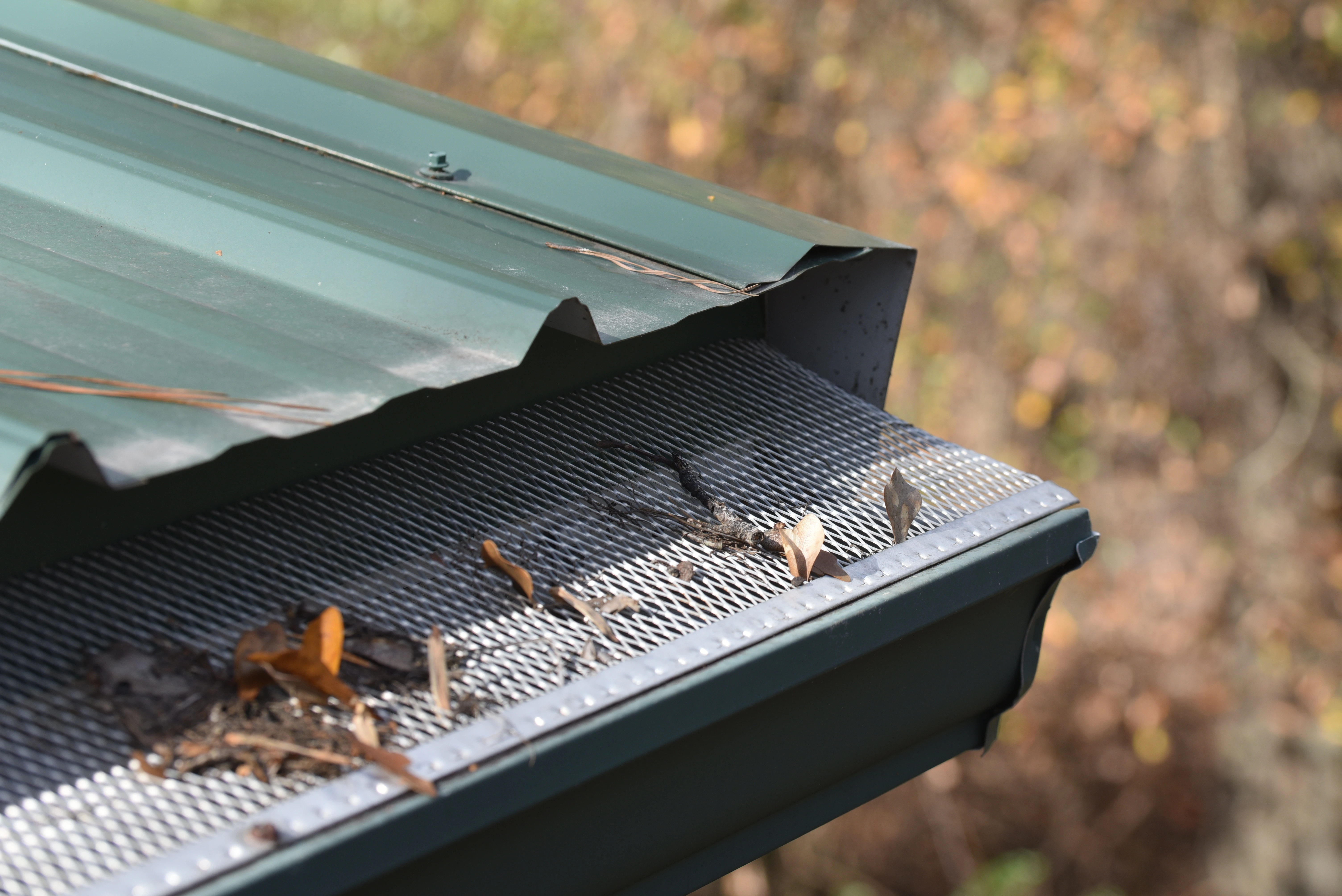
- Blocked drains
- Surface cracks
- Failed waterproof membranes
- Poor design or ageing materials
Because water sits longer on flat roofs, even small defects can cause major problems.
Signs Your Roof Is Struggling in Heavy Rain
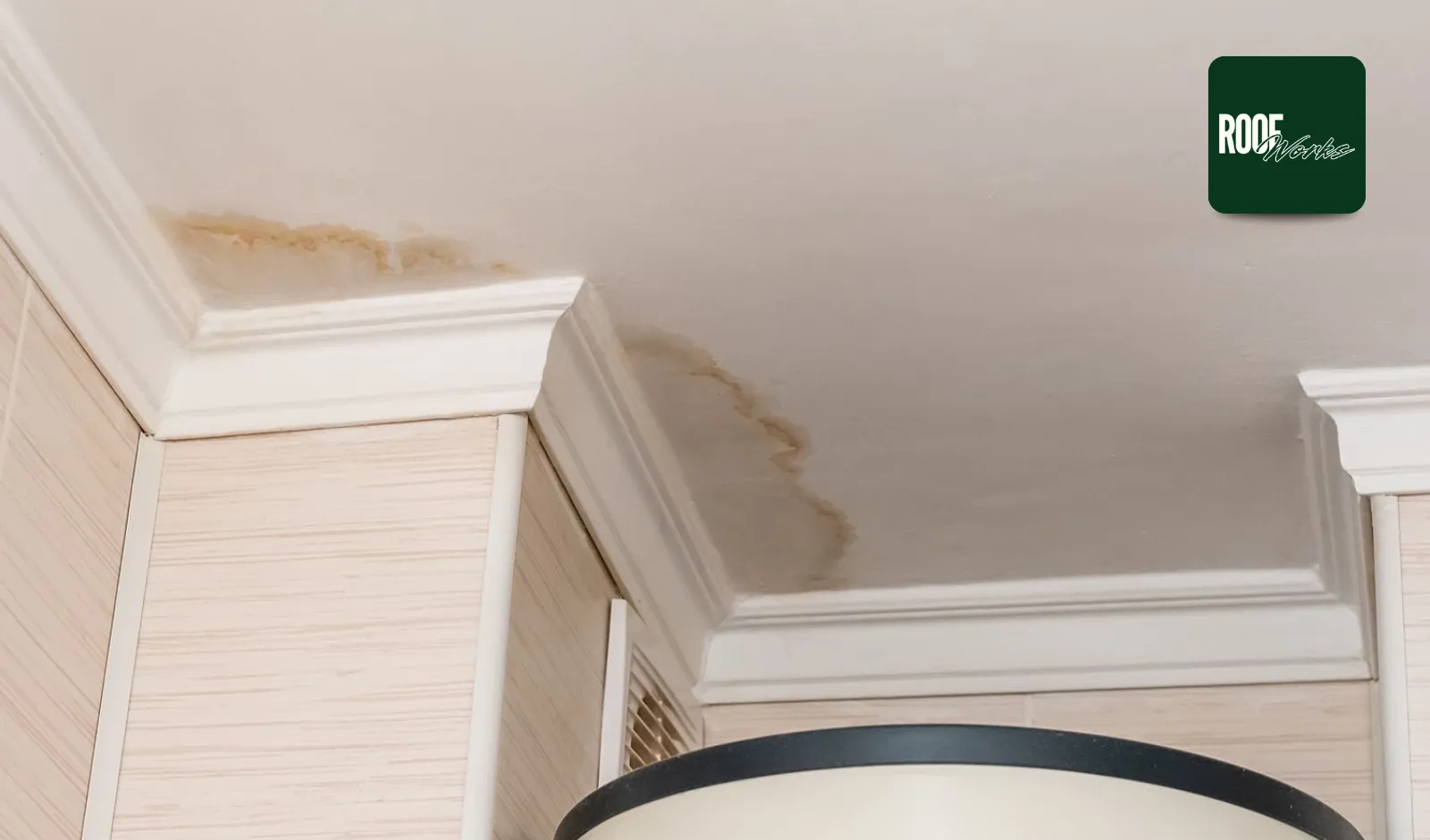
Not all signs of a leaky roof are obvious right away. Common warning signs include:
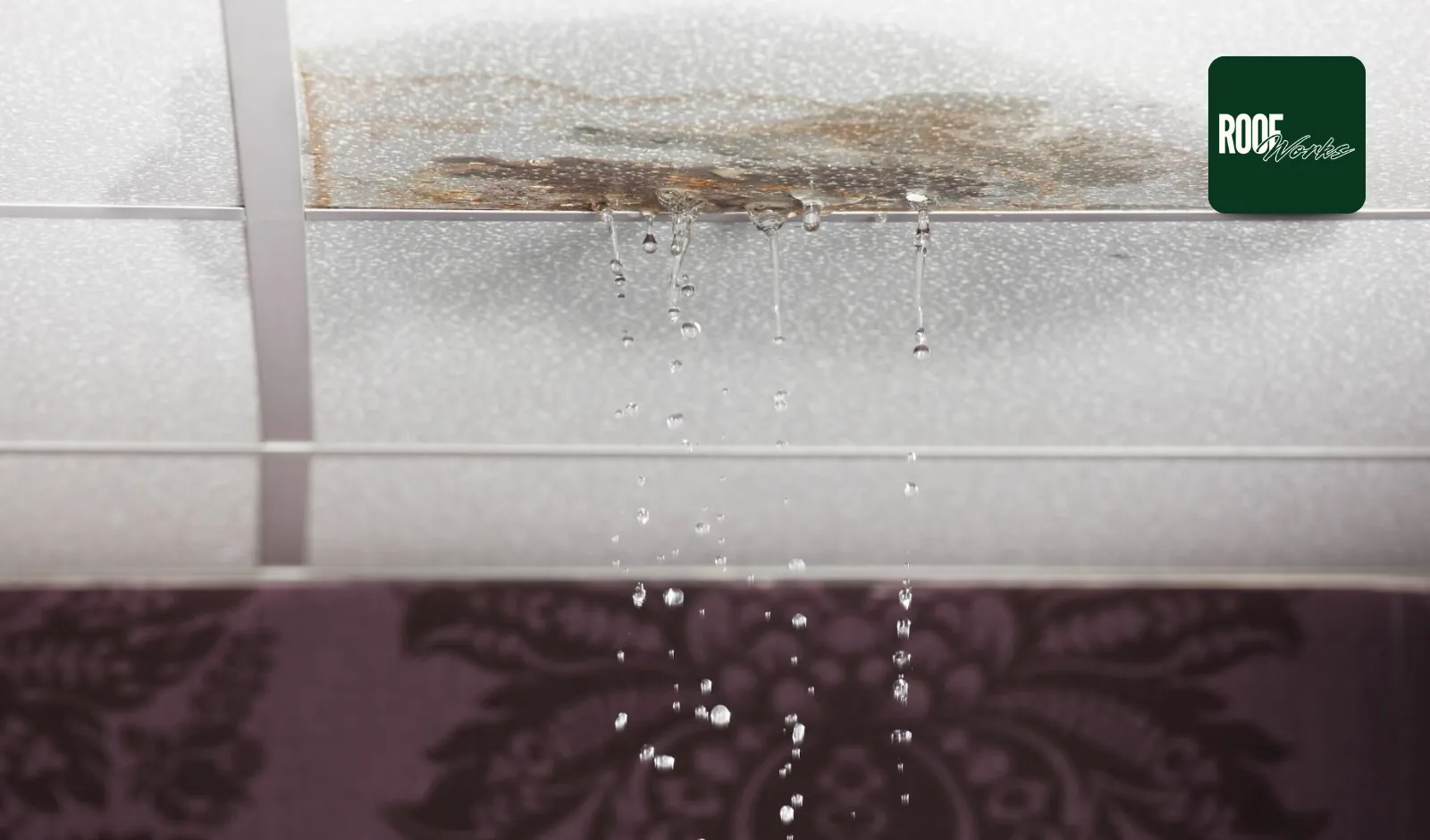
- Water stains on ceilings or walls
- Dripping sounds during storms
- Damp insulation in roof spaces
- Mould growth after rainfall
If roof leaks in heavy conditions are ignored, water damage can spread silently through walls and ceilings.
The Role of Roof Inspections
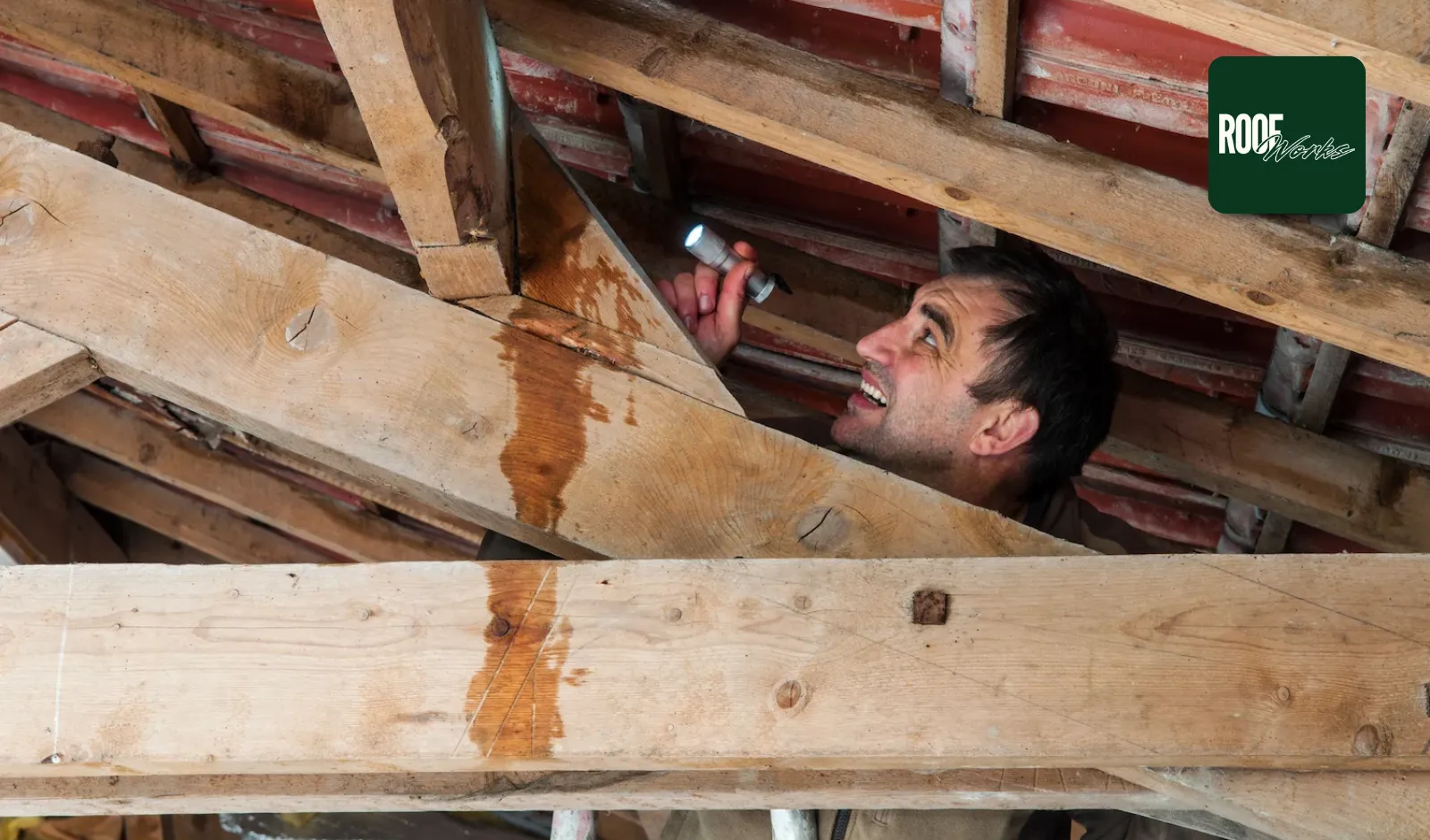
Regular roof inspections are one of the most effective ways to catch problems early. Inspections help identify issues that can be hard to spot from the ground and make it easier to find a roof leak before it causes serious damage.
Inspections help identify:
- Weak points caused by wear and tear
- Poor installation issues
- Blocked drainage areas
- Early signs of structural damage
Professional inspections are especially important for homes that experience frequent leaks during heavy rain.
Metal Roofs and Heavy Rain Performance
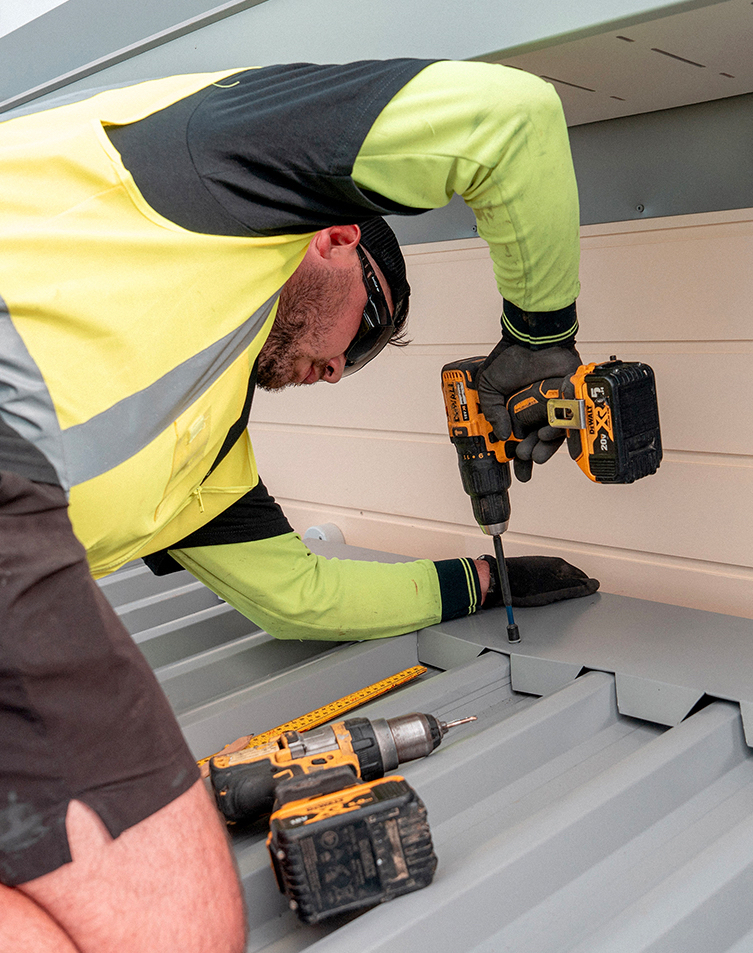
A metal roof generally performs well in wet conditions, but it is not immune to leaks. Metal roof leaks usually occur around fasteners, seams, or flashing rather than the panels themselves.
If a metal roof is improperly installed or has ageing fixings, heavy rain can force water into small gaps that stay dry during normal conditions.
Long-Term Risks of Ignoring Roof Leaks
Roof leaks during heavy rain should never be ignored. Over time, repeated moisture exposure can cause:
- Structural weakening
- Insulation failure
- Electrical hazards
- Expensive interior repairs
Addressing leaks early is more cost-effective and helps protect your home long term.
Preventing Water Damage Before It Spreads
Preventing water damage starts with identifying the cause of the leak rather than treating symptoms. Temporary fixes may slow the leak, but lasting solutions require proper assessment and repair.
In some situations, emergency roof leak repair may be needed to stop immediate water entry and prevent further damage while permanent repairs are planned.
Choosing the Right Roofing Contractor
When roof leaks keep returning, working with a qualified roofing contractor is essential. Experienced professionals understand how heavy rain affects different roof types and how to fix the root cause of leaks.
Homeowners dealing with recurring storm-related leaks often look into roof repairs in Auckland to restore protection and prevent future issues.
Final Thoughts
Roof leaks in heavy rain are a clear sign that something in the roofing system needs attention. Flat roof leaks in heavy rain are especially common due to pooled water and drainage challenges. While leaks may only appear during storms, the damage they cause can continue long after the rain stops.
Early inspections, correct repairs, and professional guidance help protect your roof, reduce water damage, and extend the life of your roofing system.
Take the Next Step to Protect Your Roof
If you are experiencing roof leaks during heavy rain, getting professional advice early can help prevent further damage and costly repairs. A proper inspection can identify whether the issue is related to installation, drainage, or worn materials.
Call Roof Works today on 03 667 3174 or book online to save $15 and get expert help before the next storm hits.


Got a question?
Contact us for a FREE installation quote or book your job online today.

Same Day Service Guarantee - Terms & Conditions

The "Same Day Service Guarantee or it's Free" applies to:
a. Residential work and Commercial only.
b. Jobs specified as needing same day service when booking a job by phone or online.
c. Residential and Commercial work booked with Grammar Electrical:
i) Before 11:00AM
ii) For calls or online bookings received after 11:00AM, the customer will be offered a job. Booking for the next business day and normal callout fees ($170+ GST) will apply.
iii) Any other jobs booked outside business hours (9:00AM - 5:00PM Monday- Friday) will incur after hours charges.
iv) This offer is excluded for jobs booked on New Zealand public holidays.
d. If Grammar Electrical are unable to attend on the same day (within 24 hours) for a job booked by the customer, the standard callout fee of $170 + GST will be waived and is free, but all other normal charges, fees and expenses will apply to perform the Electrical Services and to provide any products/materials concerning those services.
e. The Standard Callout Fee will be deducted from your bill as long as you pay within your invoice's due date. The callout charge is applicable if your invoice is overdue.
f. If Grammar Electrical are willing and able to perform the Service or provide the Goods on the same day the job is booked, however the Customer for whatever reason does not give access to their property on the day, Grammar Electrical will be deemed to have complied with it's "Same Day or it's Free" guarantee and shall be entitled to charge the customer the standard call-out fee.
g. This offer is not a guarantee of work being completed. The completion of the job will depend on stock availability and also the amount of work required.